If toothbrushes were sentient, they’d complain about their lot in life. Their thankless existence involves repeatedly cleaning one of the grimmest parts of the body, then being thrown out once their bristles are insufficiently effective. Or, in the case of electric toothbrushes, decapitated before resuming their duties with a fresh head.
The Guardian’s journalism is independent. We will earn a commission if you buy something through an affiliate link. Learn more.

This relentless cycle is essential for hygiene reasons: an ineffective brush can lead directly to tooth decay and gum disease. However, given the big dual crises of our time – climate and cost of living – it would certainly help for toothbrushes to last a bit longer. So what can we do to maximise their longevity without sacrificing dental hygiene?
How to make your toothbrush last longer
Don’t overcharge the battery
Every electric toothbrush has a battery inside the handle that, just as with a phone, will degrade over time. In most cases, this battery isn’t easily replaceable, so treating it well is essential.
“In general, it’s best not to charge your battery frequently, whether it’s ours or any other [toothbrush brand’s] batteries,” says Gyve Safavi, co-founder of the electric toothbrush maker Suri, which has made sustainability a key selling point.
Frequent charging erodes battery capacity, he says. “If you want it to last as long as possible, charge it overnight and leave it. Don’t charge it again until it goes out.”
Read our Suri 2.0 electric toothbrush review
Keep it clean
You may think that keeping your brush clean is a hygiene-only issue, but it’s also helpful for bristle longevity.
“I have seen patients ruin heads more from storage habits than from brushing,” says Dr Alan McCaffrey, founder of Red Rock Dental in Las Vegas. “Both electric and manual brushes can last longer than most people think if they are cared for correctly, but they should never be used past the point where bristles are frayed or ineffective.
“One way to extend the life of the head is to rinse it thoroughly in hot water after every use and then let it air dry upright,” he says. “Moisture trapped at the base [of the bristle] is what causes buildup and weakens bristles faster.”
Dr Nicole Khalife, owner of Lux Smiles in New York, agrees. “Clean bristles dry faster than those that stay sticky. Dry bristles are less friendly to germs, and the brush lasts longer.”
Some toothbrushes come with travel caps: small covers that can be placed over the head of the brush to protect it from dirt and detritus in luggage. But you should only use them when on the road, Khalife says. “They protect the head from dirt in a suitcase, but at home, they trap moisture. Use a ventilated pouch instead of a solid cap and always let the brush dry before packing it.”
If your brush doesn’t fully dry between uses, you could switch between brushes or heads each day, McCaffrey suggests. “Giving the bristles a day to fully dry helps them keep their shape and stiffness for longer.”
Look after the body
It’s not just the heads that need cleaning. There’s usually a visible gap between them and the body, and excess toothpaste can calcify around here, which could interfere with how the brush functions. Use a damp cloth to gently remove this, and then dry it thoroughly when done.
Allowing the brush to air dry is important, especially when it comes to charging. I’m pretty sure I got through a couple of Suri 1.0 chargers after repeated contact with a damp brush caused rust on the conductive metal connectors.
Watch your technique
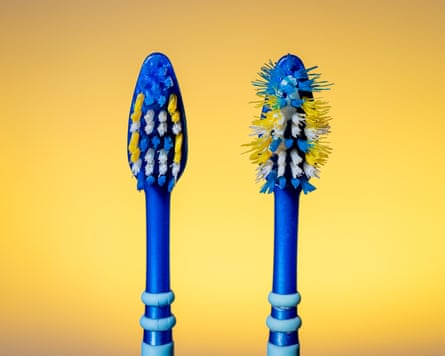
Storage is only one part of the toothbrush longevity puzzle. “Many people press hard because they think it makes their teeth cleaner,” says Khalife. “In fact, intense pressure bends the bristles and scratches the enamel. A gentle circular motion works better because the tips of the bristles sweep away plaque without flattening the fibres. Bristles that keep their shape will reach between teeth and along the gumline for the whole life of the brush.”
Electric toothbrushes have an advantage here, with users encouraged to let the motor’s vibrations do the work, rather than brushing as with manual ones.
“Electric toothbrushes are designed to help prevent over-brushing, which can cause damage to your enamel and gums,” says Barty Walsh, CEO and founder of electric toothbrush maker Ordo. “If you’re going through brush heads faster than two to three months, this is a sign you may need to change your brushing technique.”